


Create Circus Journal · Shopify
More Than Five Years as a Shopify Partner: What 300+ Client Relationships Have Taught Us
Create Circus became a Shopify Partner in February 2021.
Since then, Shopify has changed enormously. So have ecommerce businesses, customer expectations and the way people discover and buy products online.
Our role has changed too.
What began with building and improving Shopify stores has grown into something broader: helping businesses think through how their brand, user experience, technology and commercial goals need to work together.
Over the past five years, we have worked with more than 300 clients across the United States, United Kingdom, Spain, Portugal, Sweden, France, Germany, Czech Republic, Italy, the Netherlands, Chile, Brazil, Mexico, Thailand, Bahrain and South Africa.
Different markets. Different products. Different levels of ecommerce maturity.
That variety has shaped the way we approach Shopify today.
Shopify is rarely just a website project
A Shopify project can look straightforward from the outside.
A homepage. Product pages. Collections. Checkout. A few integrations.
But the decisions behind those pages are usually much more important than the pages themselves.
How should customers move through a large catalogue?
Which information belongs on a product page, and in what order?
How should variants behave?
What happens on mobile?
Which apps genuinely improve the experience, and which simply add complexity?
How much custom development is actually necessary?
How do you redesign a live store without creating unnecessary risk?
These are the questions that tend to determine whether a Shopify store simply looks good or genuinely works well for the business using it.
After working across hundreds of client relationships, one thing has become clear to us: there is no universal Shopify setup that works for every brand.
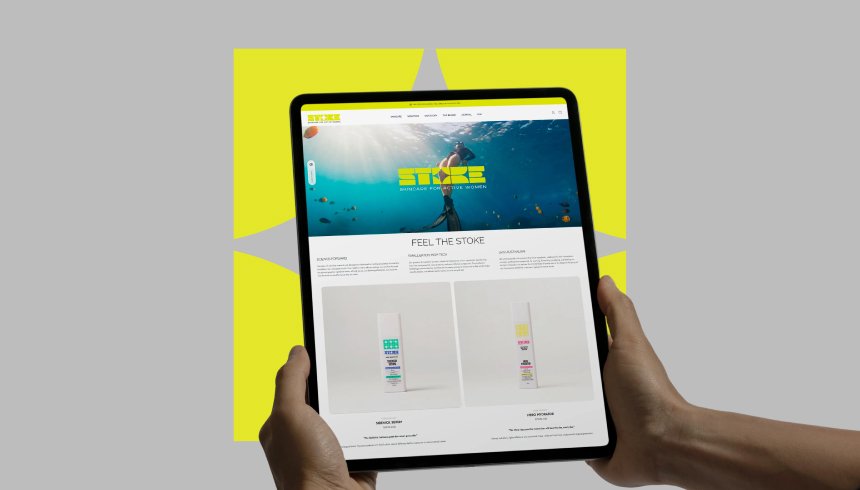
Different businesses need very different Shopify stores
Some businesses need a strong, well-configured premium theme and very little custom development.
Others reach a point where the theme starts working against them.
Some stores need sophisticated product options, custom selectors or unusual buying journeys. Others need to simplify a store that has accumulated too many apps, workarounds and disconnected features over time.
A growing brand may need flexibility.
An established retailer may need stability.
A business migrating from another platform may care most about protecting SEO, product data and existing customer journeys.
A new brand may need to establish trust before worrying about advanced functionality.
Our job as a Shopify Partner is not to make every project larger.
It is to understand what the store actually needs.
Sometimes that means custom design and development. Sometimes it means working intelligently within Shopify’s existing system. The strongest solution is usually the one that gives the business enough flexibility without creating unnecessary technical weight.

Working internationally changes the way you design ecommerce
Working with clients across the US, UK, Europe, Latin America, Asia, the Middle East and Africa has also taught us not to treat ecommerce as one homogeneous market.
Customers behave differently.
Businesses communicate differently.
Product expectations, payment habits, logistics, content density and buying confidence can vary significantly between markets.
A Shopify store serving customers in the United States may have very different priorities from one operating primarily in Italy, Sweden, Brazil or Thailand.
International ecommerce therefore involves more than switching currencies or translating a website.
The experience still needs to feel natural to the customer on the other side of the screen.
That perspective has become particularly important as more of the businesses we work with sell across borders or plan international expansion from the beginning.
The best Shopify work happens before development starts
One of the biggest lessons from the past five years is that development becomes much easier when the thinking has already been done.
Before a complex Shopify build, we want to understand the customer journey, catalogue structure, product logic, content hierarchy and technical requirements.
We want to know which sections will repeat.
Which interactions need custom behaviour.
How the design transforms on mobile.
What Shopify can handle natively.
Where an app makes sense.
And where custom development will create something genuinely useful rather than something custom simply for the sake of it.
This is why our Shopify process increasingly connects strategy, UX, design and development rather than treating them as separate stages passed from one person to another.
The better those decisions are connected, the fewer compromises appear later.

We have also learned what tends to go wrong
Shopify is flexible, but flexibility can create its own problems.
Stores often become complicated gradually.
One app solves one problem. Another app adds a new feature. A custom modification is introduced. Then another campaign requires another workaround.
After a few years, the business can be running on a store that technically works but has become difficult to maintain, slow to change or confusing for customers.
We see this particularly often when stores have grown faster than the systems underneath them.
In those situations, redesigning the visual layer alone is rarely enough.
The more useful question is:
What should we keep, what should we simplify, and what should we rebuild properly?
That question often has much more commercial value than simply asking how the new website should look.
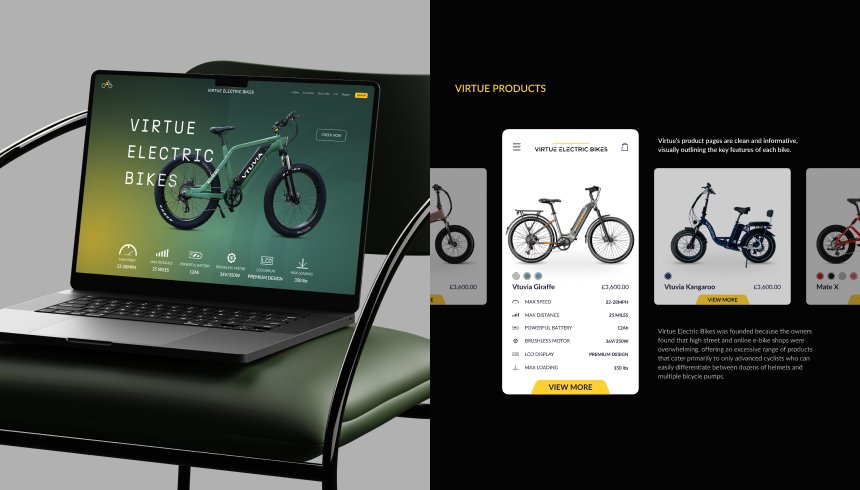
Shopify has changed, but the fundamentals have not
Shopify today is far more capable than the platform we started working with in 2021.
The ecosystem has matured. Native functionality has expanded. International selling is easier. B2B capabilities are growing. AI is beginning to influence how products are discovered and how customers research purchases.
But the fundamentals of a strong ecommerce experience remain surprisingly consistent.
Customers need to understand what you sell.
They need to trust the business.
They need to find the right product without friction.
They need enough information to make a decision.
And when they are ready to buy, the technology should get out of their way.
Design, branding and technology should support those fundamentals rather than compete with them.
What being a Shopify Partner means to us today
For Create Circus, being a Shopify Partner since 2021 is not simply a badge on the website.
It represents more than five years of working inside the platform, solving real ecommerce problems and seeing how Shopify businesses evolve after launch.
We have worked with small brands taking their first serious step into ecommerce and established businesses rebuilding stores that already serve thousands of customers.
We have designed from scratch, migrated stores, extended existing themes, developed custom functionality, improved conversion journeys and supported businesses after launch.
Every project adds another layer to how we understand the platform.
And that experience is what we bring into the next one.
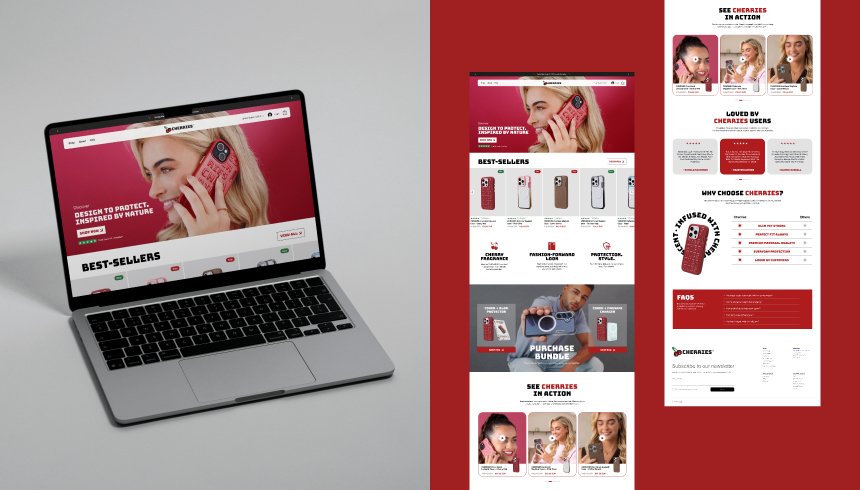
Shopify Partner since 2021
Planning your next Shopify move?
If you are planning a new Shopify store, considering a redesign or trying to understand what your current store needs next, tell us where the business is today.
We’ll help you work out the right next step and build a Shopify experience designed around where you want to take it.